15/17 Suny Jigide Street, By Celestial Way, Ogudu Lagos.
Mon-Fri 08:00 AM - 05:00 PM
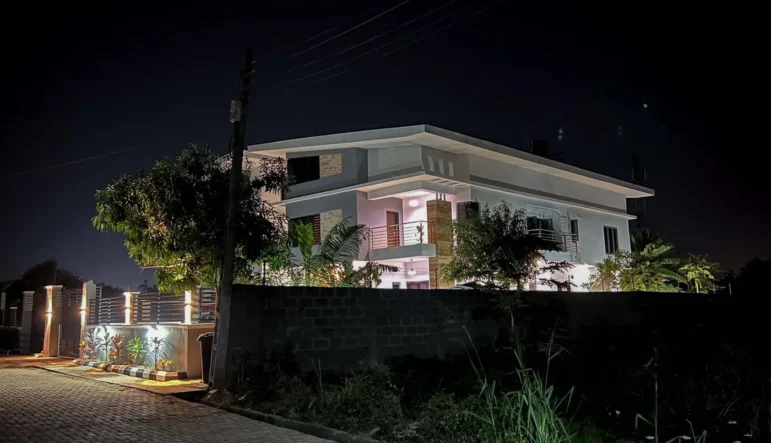
Modern buildings are becoming smarter. From automated lighting and climate control to security systems and energy management, property owners increasingly want technology that makes their spaces more comfortable, efficient, secure, and easier to manage.
One technology making this possible is KNX.
But what exactly is KNX, how does it work, and why should homeowners, developers, architects, and businesses in Lagos care about it?
KNX is an international standard for smart home and building automation. It allows different systems and devices within a building to communicate and work together through a unified automation system.
Instead of operating lighting, air conditioning, curtains, security, energy systems, and other building functions independently, KNX can connect them into one intelligent ecosystem.
For example, a single “Away” command could be configured to:
This creates a smarter and more coordinated way to manage a property.
A KNX system uses sensors, controllers, actuators, and other compatible devices to automate different functions within a building.
Here is a simple example:
Because KNX is designed as a building automation standard, it can be used across a wide range of applications, including residential properties, offices, hotels, schools, hospitals, and larger commercial developments.
KNX can be used to automate and integrate many building functions, depending on the design and requirements of the project.
Lighting can be automated based on occupancy, schedules, daylight levels, or custom scenes.
For example, lights can automatically switch off in unoccupied areas, helping to reduce unnecessary energy usage.
In Lagos, cooling can account for a significant portion of a property’s energy consumption. KNX can help manage air conditioning and climate systems more intelligently.
Temperature settings can be automated based on:
This can improve comfort while supporting more efficient energy management.
Motorised curtains and blinds can respond to schedules, sunlight, temperature, or user commands.
For example, blinds can automatically close during periods of intense sunlight to help reduce heat entering a room.
KNX can work as part of a broader smart building strategy by connecting selected automation and security functions.
Property owners can create scenarios such as an “Away” mode that adjusts lighting, closes blinds, and activates other predefined settings.
One of the major advantages of building automation is improved visibility and control over how energy is used.
KNX can help automate equipment and reduce unnecessary operation, particularly in larger homes, offices, and commercial facilities.
Smart scenes allow multiple actions to happen at the same time.
For example:
Good Morning: Open curtains, adjust lighting, and prepare selected areas of the home.
Movie Time: Dim the lights, close the curtains, and activate your preferred entertainment settings.
Away Mode: Turn off selected devices, adjust climate settings, and activate predefined security functions.
Many smart devices are designed to solve individual problems. You may have one app for lighting, another for air conditioning, another for security, and another for curtains.
KNX takes a more integrated approach.
Rather than building a property around a collection of separate consumer devices, KNX can provide a structured automation infrastructure for the building.
This is particularly valuable for:
For property owners and developers, this can create a more unified and scalable automation solution.
Yes. KNX can be particularly valuable for modern homes and developments in Lagos where comfort, security, convenience, and energy management are important considerations.
A well-designed KNX installation can help property owners automate everyday tasks while creating a premium living experience.
Imagine arriving home and having a customised scene automatically prepare your environment. Your preferred lighting can activate, curtains can adjust, and selected climate settings can be triggered.
The same principle can be applied to offices, hotels, apartments, and commercial properties.
However, the quality of the experience depends heavily on proper system design, product selection, installation, programming, and commissioning.
Absolutely.
Commercial properties often have more complex requirements than residential homes. Different areas may require different schedules, access levels, lighting conditions, temperature settings, and energy-management strategies.
KNX can support the automation of functions across different zones within a building.
For example, an office building may automate:
This can help facility managers gain better control over building operations.
The best time to consider KNX is during the planning or construction stage of a project. Early planning allows the automation infrastructure to be properly integrated into the electrical and building design.
However, smart automation solutions can also be considered during major renovations and upgrades.
Before starting, it is important to define what you want the building to do.
Ask questions such as:
A clear strategy helps ensure the automation system is designed around the way the property will actually be used.
A smart building system is only as effective as its design and implementation.
Successful KNX projects require careful planning, professional installation, programming, testing, and commissioning. The system should also be designed with the property’s current and future requirements in mind.
Whether you are building a luxury home, developing apartments, upgrading an office, or planning a commercial project, working with an experienced automation partner can make the process significantly smoother.
KNX provides a powerful foundation for intelligent building automation, helping connect lighting, climate control, shading, energy management, and other systems into a more coordinated experience.
If you are planning a smart home or building automation project in Lagos, CorePower can help you explore the right solution for your property.
Contact CorePower about your project and discover how KNX and intelligent automation can improve comfort, convenience, control, and building efficiency.
Call/WhatsApp (+234) 9130003339
