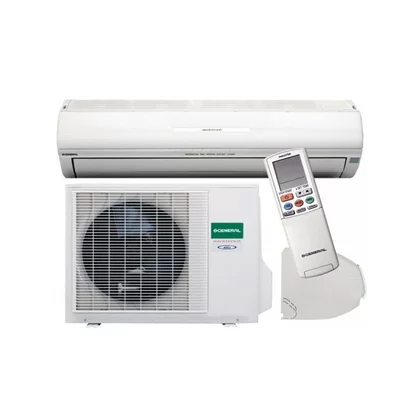
Choosing the right air conditioner goes beyond cooling capacity and price. With rising electricity costs and increasing demand for energy-efficient cooling solutions, inverter air conditioners have become a popular choice for homes, offices, and commercial buildings.
However, not all inverter ACs use the same technology. Understanding the different types can help you select a system that delivers the right balance of cooling performance, energy efficiency, and comfort.
What Is an Inverter AC?
An inverter air conditioner uses variable-speed compressor technology to regulate its cooling output according to the temperature of a room.
Unlike conventional air conditioners that typically switch their compressors on and off, inverter ACs adjust compressor speed to maintain the desired temperature.
This helps reduce unnecessary energy consumption, provides more consistent cooling, and can improve overall operating efficiency.
5 Different Types of Inverter ACs
Inverter air conditioners can be classified by their compressor technology and system configuration. Here are five common types.
- Single-Rotary Inverter AC
A single-rotary inverter AC uses a compressor with one rotary compression mechanism. Its speed adjusts according to the cooling requirements of the room.
These systems are commonly found in residential air conditioners because they offer a practical combination of performance, efficiency, and affordability.
Best for: Bedrooms, living rooms, small offices, and residential spaces.
- Dual-Rotary Inverter AC
A dual-rotary or twin-rotary inverter AC uses two rotary compression mechanisms to improve mechanical balance and reduce vibration.
Depending on the design, this technology can provide smoother operation and improved performance under varying cooling conditions.
Best for: Homes and offices where consistent cooling, quieter operation, and efficiency are important.
- Scroll Inverter AC
Scroll inverter ACs use two spiral-shaped components to compress refrigerant. One scroll remains stationary while the other moves in an orbital motion.
When combined with inverter technology, the compressor adjusts its speed to meet changing cooling demands.
These compressors are commonly used in larger air conditioning and commercial HVAC applications.
Best for: Commercial buildings, larger offices, and installations requiring substantial cooling capacity.
- Multi-Split Inverter AC
A multi-split inverter system connects multiple indoor air conditioning units to a single outdoor unit.
This configuration allows different rooms to have individual temperature controls without requiring a separate outdoor unit for every indoor unit.
It is particularly useful where outdoor installation space is limited.
Best for: Hotels, residential buildings, offices, and properties with multiple rooms requiring independent cooling.
- Inverter VRF/VRV Systems
Variable Refrigerant Flow (VRF) and Variable Refrigerant Volume (VRV) systems are advanced air conditioning solutions designed for buildings with multiple cooling zones.
They use sophisticated controls to regulate refrigerant flow according to the cooling requirements of different indoor spaces.
Many VRF/VRV systems incorporate inverter-driven compressors to improve capacity control and operational efficiency.
Best for: Hotels, shopping complexes, large offices, commercial developments, and other large buildings.
How to Choose the Right Inverter AC
Before purchasing an inverter air conditioner, consider these important factors:
- Room size: Choose an AC with the appropriate cooling capacity for your room or building. Consider ceiling height, windows, insulation, and occupancy.
- Energy efficiency: Compare energy ratings and specifications rather than relying solely on the inverter label.
- Usage requirements: Consider how frequently the AC will operate and whether it is intended for residential or commercial use.
- Electrical supply: Check your electrical infrastructure, especially if you intend to use a generator, solar system, or battery backup.
- Installation and maintenance: Proper installation and regular servicing are essential for reliable performance and equipment longevity.
Conclusion
Understanding the different types of inverter ACs makes it easier to choose an air conditioning system that meets your cooling requirements.
Whether you need a single-rotary inverter AC for your bedroom, a dual-rotary system for your office, or a VRF solution for a commercial building, the right choice depends on your space, cooling demand, and budget.
At Corepower, we understand the importance of selecting the right air conditioning solution for your environment.
Looking for a reliable inverter AC for your home or business?
Contact Corepower for professional guidance on air conditioning solutions, installation, and maintenance. Let us help you achieve comfortable indoor temperatures and efficient cooling.
Call/WhatsApp (+234) 9130003339