15/17 Suny Jigide Street, By Celestial Way, Ogudu Lagos.
Mon-Fri 08:00 AM - 05:00 PM
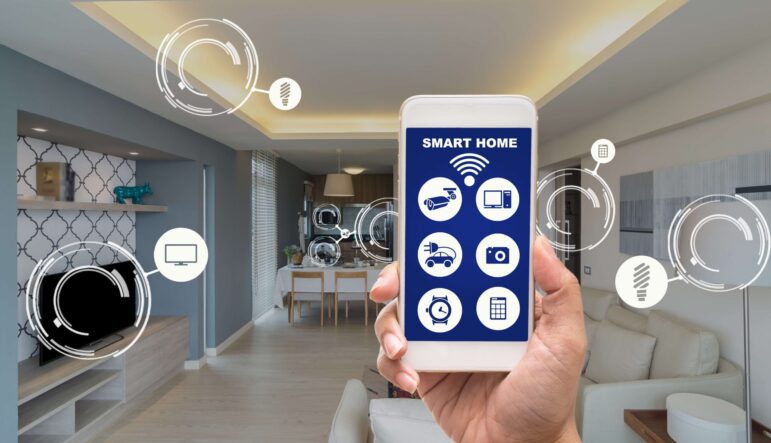
Building a new home or renovating an existing one is the best time to think about smart home technology.
Many homeowners in Lagos and across Nigeria wait until construction is complete before considering automation. By then, installing certain systems may require opening walls, running new cables, relocating electrical points, or making expensive modifications.
A smarter approach is to plan ahead.
Smart home technology is not only about controlling your lights with a phone or speaking to a voice assistant. When properly integrated into a building, it can improve security, simplify power management, automate routine tasks and give homeowners better control over how their homes operate.
Core-Power provides smart home solutions alongside electrical, solar, smart surveillance and building services, making early planning especially valuable for projects where these systems need to work together.
If you are planning to build or renovate a home in Lagos, Abuja, Port Harcourt or anywhere else in Nigeria, here are seven smart home features worth considering before the walls are closed and the finishing work begins.
Lighting is one of the easiest smart home features to enjoy, but it can be much easier to install properly when it is considered during the electrical design stage.
Instead of simply installing conventional switches throughout the house, you can plan for smart lighting controls that allow different areas of the home to work together.
For example, you could create scenes such as:
For homes in Lagos, where convenience and energy management are increasingly important, smart lighting can also include timers, occupancy sensors, and remote control.
Security is a major concern for many homeowners in Nigeria. If you are already planning CCTV cameras, perimeter security, access control, or an alarm system, it makes sense to consider how these systems will fit into the overall design of your home.
A well-planned smart security system can include:
The advantage of planning early is that cable routes, camera positions, equipment locations and network infrastructure can be considered before ceilings and walls are completed.
This can produce a cleaner installation and reduce the need for visible surface trunking or disruptive modifications later.
This is one of the most important smart home features for homes in Lagos and other parts of Nigeria.
Unlike homes in countries with highly predictable grid electricity, Nigerian homeowners often have to manage multiple power sources, including the national grid, generators, solar systems, and battery backup.
A properly designed smart power management system can help homeowners monitor and control electrical loads more effectively.
For example, your system can be designed around questions such as:
Planning this before construction gives your electrical and energy systems a better foundation. It also allows for proper panel design, circuit separation and load prioritisation.
Core-Power already provides power and energy audit services, solar inverter solutions and smart home solutions, which makes coordinated planning particularly relevant for Nigerian homes that rely on more than one power source.
Automated curtains may sound like a luxury feature, but they can also add convenience, privacy, and better control over daylight.
With the right planning, curtains or blinds can be programmed to:
However, automated window treatments require more than simply buying a motorised curtain after construction.
You may need to plan for power supply, curtain pockets, motor locations and control infrastructure. These details are much easier to coordinate while designing or renovating the space.
For luxury residences, duplexes and modern apartments in Lagos, planning these features early can help create a cleaner and more integrated result.
Water management is another feature that can be particularly useful in Nigerian homes.
Many properties rely on water tanks, boreholes, pumps, and multiple plumbing systems. Without proper monitoring, pumps may run unnecessarily, tanks may overflow, or homeowners may not immediately know when a problem occurs.
A smart water management setup can be designed to help monitor:
The best time to consider these features is during the plumbing and electrical design stages.
You may need sensors, control panels, dedicated electrical circuits, and properly coordinated plumbing infrastructure. Planning them after construction can be more difficult and may increase installation costs.
A smart home is only as reliable as the infrastructure supporting it.
Many homeowners make the mistake of assuming that installing a standard Wi-Fi router is enough for an entire smart home. This can become a problem in larger houses, duplexes, and multi-storey properties, where walls, distance, and the number of connected devices affect network performance.
Before construction or renovation is completed, consider planning for:
A strong network infrastructure can make your smart home more stable and easier to expand over time.
Instead of treating connectivity as an afterthought, it should be part of the building’s technology plan.
The final feature is not a single device. It is the ability to bring different systems together.
A well-designed smart home can allow selected functions to be controlled from one interface rather than requiring separate apps for lighting, security, entertainment, power and other systems.
Depending on the design, homeowners may be able to use wall controls, mobile devices or other interfaces to manage different parts of the home.
The important question is not simply, “Which smart devices should I buy?”
A better question is:
“How do I want my home to work?”
For example, one Away command could potentially trigger a sequence that turns off selected lights and appliances while activating the appropriate security settings.
This is why early planning matters. A collection of unrelated smart devices does not always provide the same experience as a properly designed and integrated system.
The biggest advantage of planning early is not just convenience. It is coordination.
When smart home requirements are considered alongside electrical, plumbing, security, and power systems, the project team can make decisions before construction work makes those decisions expensive to change.
This can help you plan for:
For homeowners building in Lagos, where a property may depend on several interconnected systems for power, water, security and comfort, this coordinated approach can be particularly valuable.
You do not have to automate everything at once.
The most important step is to make sure your home is ready.
You may decide to start with smart lighting and security, then add energy management, automated curtains, or other features later. But planning the infrastructure during construction or renovation can give you more flexibility and help avoid unnecessary retrofit costs.
Core-Power Limited can help you plan and integrate the systems that make a modern home smarter, more secure, and easier to manage. From smart home automation and surveillance to electrical design, solar solutions and other building services, the right approach starts with proper planning.
Contact CorePower to discuss your smart home project before construction or renovation moves too far ahead.
Call/WhatsApp (+234) 9130003339
