15/17 Suny Jigide Street, By Celestial Way, Ogudu Lagos.
Mon-Fri 08:00 AM - 05:00 PM
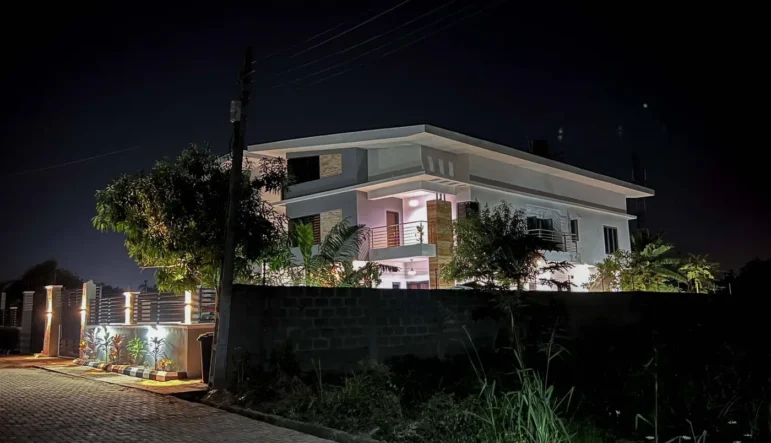
Technology is changing how we live at home. Today, you can turn off your lights from your phone, check your security cameras while at work, control your air conditioner automatically, and receive an alert when there is unusual activity around your property.
These features are part of what we call a smart home.
For homeowners in Nigeria, however, upgrading to a smart home requires more than buying smart devices. You need to think about electricity supply, internet connectivity, security, compatibility, and how all the systems will work together.
The good news is that you do not have to automate everything at once. A good smart home can be built step by step.
A smart home uses connected devices and automated systems to help you control and monitor your home.
Depending on the setup, you can control these systems from a smartphone, tablet, wall panel, remote control, or even by voice. You can also create automatic actions.
For example, when you leave home, one command could switch off selected lights and appliances, adjust your air conditioning, and activate your security system.
The aim is not simply to make your house look modern. Good home automation should make your home easier to manage, more secure, comfortable, and energy-efficient.
There are many options, and you can choose them based on your needs and budget.
Smart lighting: Control lights remotely, dim them, set schedules, or use sensors to switch them on and off automatically.
Smart security: Integrate CCTV cameras, motion sensors, alarms, smart locks, and video doorbells for better monitoring.
Smart air conditioning: Set temperatures and schedules so that cooling is used when needed rather than running unnecessarily.
Smart curtains and blinds: Open and close curtains automatically based on time, sunlight, or your preferred settings.
Smart appliances: Monitor and control compatible televisions, water heaters, pumps, and other household equipment.
Energy monitoring: See how electricity is being used and identify appliances or systems that consume more power.
Smart power management: Coordinate grid electricity, inverters, batteries, solar systems, generators, and selected electrical loads.
One major benefit of smart home technology is convenience. Instead of moving around your house to control different systems, you can manage many of them from one place.
Security is another important benefit. Smart cameras, sensors, locks, and alerts can help you know what is happening around your property, even when you are away.
Electricity is a major consideration in Nigerian homes, especially when you depend on a combination of grid supply, solar panels, batteries, inverters, or generators. Automation and energy monitoring can help reduce waste and make better use of available power.
For example, there is little benefit in powering unnecessary lights or high-load equipment from your battery system. With the right design, selected loads can be switched off or controlled automatically when required.
This is one area homeowners sometimes overlook.
Smart home equipment still depends on electrical infrastructure. Before adding automation, it is important to check your distribution boards, wiring, earthing, surge protection, circuit protection, and backup power arrangement.
A smart home design should answer practical questions such as: Which equipment needs backup power? How long should it operate during an outage? What equipment should not run on batteries? Is there enough inverter capacity? Can solar generation support the expected daytime load?
Solving these questions early helps create a system that is both smart and reliable.
A smart device is only useful when it has the power it needs.
Nigeria’s electricity conditions make power planning an important part of smart home design. Depending on the property, your solution could include an inverter, battery storage, solar panels, grid power, or a generator.
The system can also be designed to prioritise important loads such as security equipment, internet routers, lighting, and other essential devices during a power outage.
The goal is not necessarily to put every appliance on backup power. From an engineering point of view, it is usually better to determine which loads are essential and size the backup system accordingly.
Many smart devices communicate through Wi-Fi or other wireless technologies. Some systems also use wired connections.
For a small apartment, a good wireless network may be enough. In a large house, you may need multiple access points or a properly designed wired network to achieve reliable coverage.
Network planning becomes even more important when you have several cameras, televisions, smart switches, sensors, and other connected devices.
You should also consider what happens when the internet goes down. Wherever practical, essential functions such as lighting should still be controllable locally.
It is easy to buy individual smart devices online. The challenge comes when you try to make all of them work together.
One product may require its own app, another may use a different communication standard, and another may not integrate with your preferred automation platform at all.
Before purchasing equipment, think about the complete system rather than individual gadgets.
A properly planned smart home should be easy for everyone in the house to use. You should not need five different apps just to perform basic daily tasks.
Connecting more devices to your network also creates more areas that need protection.
Use strong passwords, keep device software updated, secure your home network, and change default login details when installing new equipment. It is also wise to buy equipment from reputable manufacturers that provide security updates and ongoing support.
For sensitive systems such as cameras, access control, and smart locks, security should be part of the design from the beginning.
The best smart home is not necessarily the home with the most technology.
Start by identifying problems you actually want to solve. Maybe you need more reliable security. Perhaps you want to reduce energy waste, manage your backup power more effectively, or control your lighting and air conditioning more conveniently.
Whether you are building a new house, renovating your current property, or simply want to introduce automation gradually, proper planning can save you time and money.
CorePower can help you assess your requirements and design a smart home solution around your property, power needs, security requirements, and budget in Nigeria.
Contact CorePower today to discuss your smart home project and take the next practical step toward a safer, smarter, and more energy-efficient home.
Call/WhatsApp (+234) 9130003339
